Stop Thinking About Loyalty as a Forever Thing: Build a Halloween Loyalty Program Instead
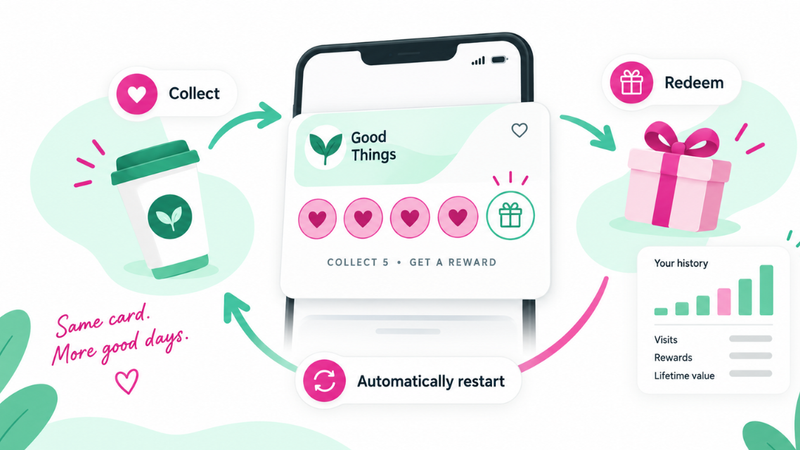
Most businesses think about loyalty programmes in one way: customers collect stamps, earn a reward, redeem it, and then start again.
That model works brilliantly for long-term customer retention. A permanent loyalty programme can quietly encourage repeat visits for months or years, becoming part of the normal rhythm of the business.
But loyalty doesn't always have to be permanent.
Sometimes, the most interesting loyalty programme you can create is one designed to disappear.
Halloween gives small businesses the perfect excuse to experiment with a short-term loyalty programme: something fun, seasonal and built around a specific behaviour you want to encourage over the next six or eight weeks.
And the reward doesn't need to be enormous. The objective isn't necessarily to give something valuable away. It's to give customers a reason to participate.
Long-Term Loyalty and Short-Term Loyalty Solve Different Problems
A traditional loyalty programme is designed to build habits over time. Buy ten coffees and get one free. Collect six stamps and receive a discount. Complete five appointments and unlock a reward.
There may be no deadline at all. Customers simply progress whenever they visit.
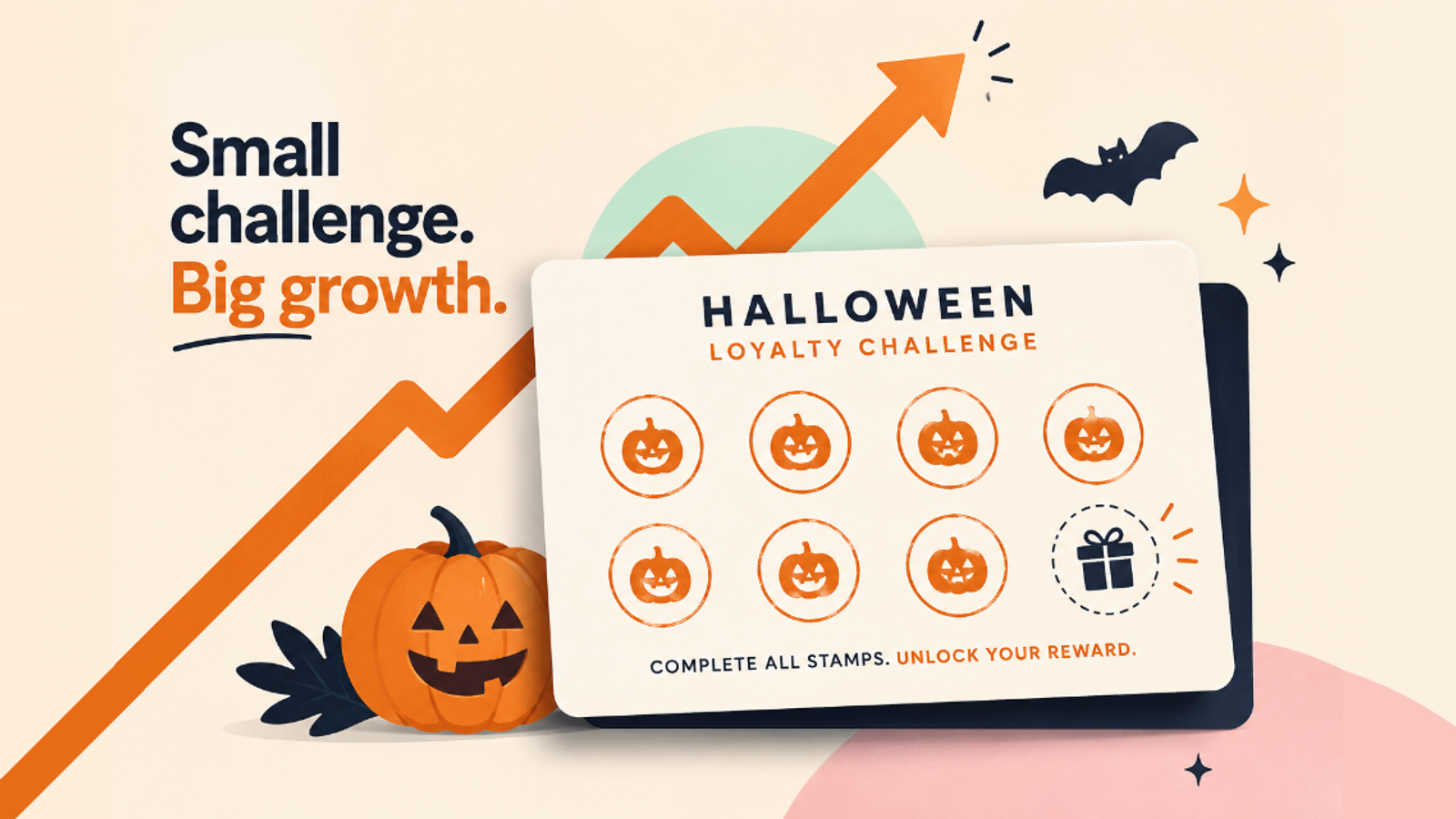
A seasonal loyalty programme changes the dynamic because it has a beginning, an end and a specific goal. Instead of asking customers to keep visiting until they eventually earn something, you're giving them a challenge to complete before Halloween.
That deadline creates a little urgency, but more importantly it gives the campaign a purpose. A short-term loyalty programme can be designed around whatever behaviour would benefit your business most right now: increasing visit frequency, encouraging quieter-day bookings, introducing customers to new products or simply keeping people engaged.
Start With the Behaviour, Not the Reward
This is where a lot of promotional campaigns go wrong. Businesses start by asking, “What should we give away?” A better question is: “What would we like our customers to do more often?”
Imagine you're a personal trainer heading into September. Perhaps the challenge isn't getting new people through the door. Perhaps it's keeping existing clients consistent as summer ends and routines begin to change.
The Halloween Consistency Challenge
Attend at least one session every week throughout September and October and complete the challenge before Halloween.
The reward might be a Halloween goodie bag, a protein shake, a guest pass, a branded shaker or some other small treat. Nothing extravagant needs to happen.
The real value to the business is that you've created a reason for customers to maintain a behaviour that already matters to them — consistency — while also giving yourself a fun campaign to talk about.
The same thinking can work across almost any small business:
- Café: encourage quieter afternoon visits by rewarding four visits between 2pm and 4pm.
- Nail technician: encourage repeat appointments by rewarding customers who complete two appointments before Halloween.
- Fitness studio: reward customers who attend ten classes during September and October.
- Dog groomer: encourage repeat bookings with a two-visit Halloween challenge.
- Bakery: encourage product discovery by asking customers to try five seasonal products.
- Salon: encourage customers to experience more of the business by completing three different treatments.
- Street food business: encourage menu exploration by rewarding customers who try three different dishes.
This is where a short-term loyalty campaign becomes much more interesting than simply offering 10% off. You're not just discounting something. You're designing customer behaviour.
Turn Your Loyalty Programme Into a Mini Campaign
One of the biggest advantages of a Halloween loyalty programme is that it gives your business something new to talk about.
Permanent loyalty programmes tend to become part of the furniture. That's not a criticism; in many ways, that's exactly what you want. Customers know the programme exists and quietly collect their stamps.
A short-term programme is different. You can launch it, name it, create a countdown around it, show customers making progress and celebrate the people who finish it. That transforms a loyalty card into a small marketing campaign.
Instead of another Instagram post saying, “Don't forget we have a loyalty programme,” you can say, “Our Halloween Challenge starts next week.”
During the following weeks you have plenty more to talk about: people collecting their first stamps, customers reaching halfway, reminders that there are two weeks remaining and, eventually, customers completing the challenge.
One simple promotion can generate weeks of social media content while also encouraging repeat business. That is where short-term loyalty can become particularly powerful for small businesses with limited marketing budgets.
Make It Memorable
You also have permission to make these campaigns slightly ridiculous. In fact, you probably should. You're not writing a multinational corporate rewards strategy. You're trying to give customers a small reason to smile, participate and remember your business.
- Survive the Zombie Apocalypse: a barber challenges customers to complete three visits before Halloween.
- The Great Pumpkin Hunt: a bakery gives customers a pumpkin stamp for every seasonal product they try.
- Six Weeks From Hell: a fitness studio rewards anyone who completes a set number of sessions before 31 October.
- Coffee Before Coffins: a café turns regular morning coffees into a Halloween challenge.
- Trick or Eat: a street-food business encourages customers to work their way through three different menu items.
The mechanics are simple. The presentation is what makes people notice. And that matters because a good seasonal loyalty idea isn't only about customer retention. It can also create brand awareness.
A challenge with a memorable name is easier to photograph, easier to share and easier for a customer to mention to a friend.
Use Short-Term Loyalty as an Experiment
There's another advantage that small businesses often overlook. A seasonal loyalty programme gives you permission to experiment without committing to anything permanently.
Run it for six weeks. See what happens. Did customers engage with it? Was the reward appealing? Did people actually complete it? Did afternoon visits increase? Did customers try more products? Did it create conversations online or in the shop?
If it works, you've learned something valuable about your customers. If it doesn't, you're not stuck running the same promotion forever.
Halloween can become Christmas. Christmas can become January. January might become Valentine's Day, Easter or the start of summer. Over time, you can build a simple calendar of seasonal customer loyalty campaigns, each designed around a particular business objective.
The clever part isn't running constant promotions. It's using each campaign to test what genuinely motivates your customers.
The Best Halloween Loyalty Ideas Solve a Business Problem
Don't create a Halloween programme just because pumpkins look good on Instagram. Start with the problem.
If Mondays are quiet, build a challenge around Monday visits. If customers often disappear after their first appointment, create a challenge that encourages a second and third. If gym members struggle with consistency, reward attendance. If you're launching a new menu, encourage customers to explore it. If you want more word-of-mouth marketing, create something unusual enough that customers will want to talk about it.
The Halloween theme makes the campaign timely. But the business objective should determine how it works.
A Simple Formula for Creating Your Own Halloween Loyalty Programme
1. Decide what you want customers to do
Do you want them to visit more frequently, book again, come during quieter periods, attend consistently or try something new?
2. Give the campaign a finish line
For a Halloween loyalty programme, September and October give customers enough time to participate without making the challenge feel rushed.
3. Decide what counts as progress
That could be visits, appointments, purchases, products tried, classes attended or specific challenges completed.
4. Choose a simple reward
A freebie, upgrade, seasonal product, guest pass, goodie bag, secret menu item or small piece of merchandise may be enough. The reward doesn't have to be expensive. It just needs to make completing the challenge feel worthwhile.
Don't Launch Your Halloween Programme on October 25th
This is perhaps the most important part. If you want customers completing and redeeming a Halloween loyalty programme around 31 October, they need enough time to actually participate.
That means the best time to start thinking about it isn't Halloween. It's before October begins.
September is the opportunity to launch the campaign, introduce the challenge and give customers plenty of time to make progress naturally. By October, people should already be collecting. By Halloween, people should be finishing.
Loyalty Doesn't Have to Be Boring
The businesses that get noticed aren't always the ones with the biggest marketing budgets. Sometimes they're simply the businesses willing to ask: “How could we make this more interesting?”
A short-term Halloween loyalty programme is a perfect example. It can be inexpensive to run, simple to explain and flexible enough to work for almost any small business. More importantly, it turns ordinary customer behaviour into something customers can participate in.
So this Halloween, don't just change your social media graphics and put a pumpkin on the counter.
Create something customers can complete. Give them a challenge. Give them a finish line. Give them a reason to come back.
And if the idea works? Don't wait until next Halloween to do it again.