What Small Businesses Can Learn from Big-Brand Loyalty
You probably interact with some of the most sophisticated customer-retention systems in the world every week without giving them much thought.
A coffee app shows you how close you are to a reward. A supermarket gives you an offer based on something you regularly buy. A retailer gives members early access, a birthday benefit or a reason to come back next month.
Big brands have the budgets, data teams and technology to make these systems enormously sophisticated. Small businesses do not need to copy the machinery. What is worth copying is the thinking behind it.
Look closely and many of these ideas are really small prompts: come back, interact, reach the next milestone, feel recognised, or choose us again.
Here are five examples worth noticing, and the much smaller versions an independent business can borrow.
1. Starbucks makes progress visible
Starbucks Rewards is a useful example because the progress is extremely easy to understand. UK members currently earn 10 Stars for every £1 spent, can start redeeming rewards from 150 Stars, and can reach Gold Level at 2,500 Stars. Gold adds benefits including complimentary extras and a birthday drink.
The clever part is not simply that Starbucks gives things away. It turns a series of otherwise separate purchases into visible progress towards something.
The small-business version
Make progress easy to see. A café might have a straightforward visit reward. A nail technician could use smaller milestones on the way to a larger reward. A personal trainer might reward consistency across a block of sessions.
The customer should be able to answer one simple question: “What am I working towards?”
Loytu does this by allowing you to create milestones inside your end goal. e.g. "Collect 9 Stamps for 30% off, reach 4 stamps for a free gift"
2. Tesco uses what it knows to make offers more relevant
Tesco's Your Clubcard Prices programme gives selected customers weekly personalised offers based on their previous purchase history. New offers appear in the Tesco app each Wednesday and remain available for seven days.
That is a different kind of loyalty mechanic. Instead of giving every customer exactly the same promotion, Tesco can make the interaction feel more relevant to what that person actually buys.
The small-business version
You do not need supermarket-scale data science to recognise different customers. A salon knows who regularly books colour. A dog groomer knows which customers come every six weeks. A café knows its familiar morning faces.
Use the information customers have willingly shared with you and the relationship you already have. That could mean a relevant WhatsApp message, a reminder when somebody is approaching their normal return time, or an offer aimed at a particular group rather than discounting for everybody.
Personalisation can start with paying attention.
Loytu does this by showing you who you should re-engage with and business labels allow you to personally label each card.
3. IKEA has created a reason for today's purchase to become tomorrow's visit
One IKEA Family promotion in summer 2026 gave members who spent £60 or more during the qualifying period a £10 coupon for a later visit. The important detail is the timing: the benefit was earned on one visit and redeemed during a later period.
That creates a bridge between two transactions. The first purchase does not have to be the end of the interaction.
The small-business version
Think beyond discounting the purchase happening today. Could today's appointment unlock something useful next month? Could a busy December visit earn a benefit that is only available in quieter January? Could completing one service create an incentive to return for the next?
This is particularly useful for businesses with predictable quieter periods because the reward can be designed around when you actually want the customer to come back.
Loytu does this by allowing you to run multiple programmes, so you can create a short term seasonal incentive.
4. Sephora rewards interaction, not only spending
MY SEPHORA members earn points when they shop, but Sephora also awards points for leaving a review. Its programme then layers in other benefits such as reward choices, birthday treats, member offers, delivery benefits and access to sales depending on tier.
That is an interesting reminder: a valuable customer interaction does not always have to be a transaction.
The small-business version
Think about the actions that strengthen your relationship even when no money changes hands. Leaving useful feedback. Completing a challenge. Engaging with a seasonal campaign. Referring somebody. Checking in consistently. Sharing a result or testimonial, where appropriate and with clear consent.
Not every one of those actions needs a financial reward. Sometimes recognition, a small perk or progress towards something is enough to make participation feel worthwhile.
Loytu does this by not needing to be in front of the customer to issue a reward, you can remotely issue a reward from the Loytu dashboard and mobile business app.
5. Boots gives customers reasons to open the app between purchases
Boots uses its app for more than holding an Advantage Card. It offers personalised deals, notifications about brands, offers and events, and has also introduced Play & Win games through which eligible Advantage Card members can win reward points.
Whether or not a small business would ever build a game is almost beside the point. The lesson is that the relationship is not limited to the checkout.
The small-business version
Give customers occasional reasons to interact between purchases. Run a simple Instagram challenge. Ask a question. Create a seasonal goal. Give regulars first access to appointments. Send something genuinely useful rather than only messaging when you want them to buy.
Those small touchpoints can help a business remain familiar until the customer is ready to spend again.
Loytu's links and QR code card pick ups allow you to run loyalty from anywhere or alongside your social campaigns.
The pattern underneath all five examples
These brands are doing very different things, but there is a common thread. They are creating small moments that make the customer relationship continue.
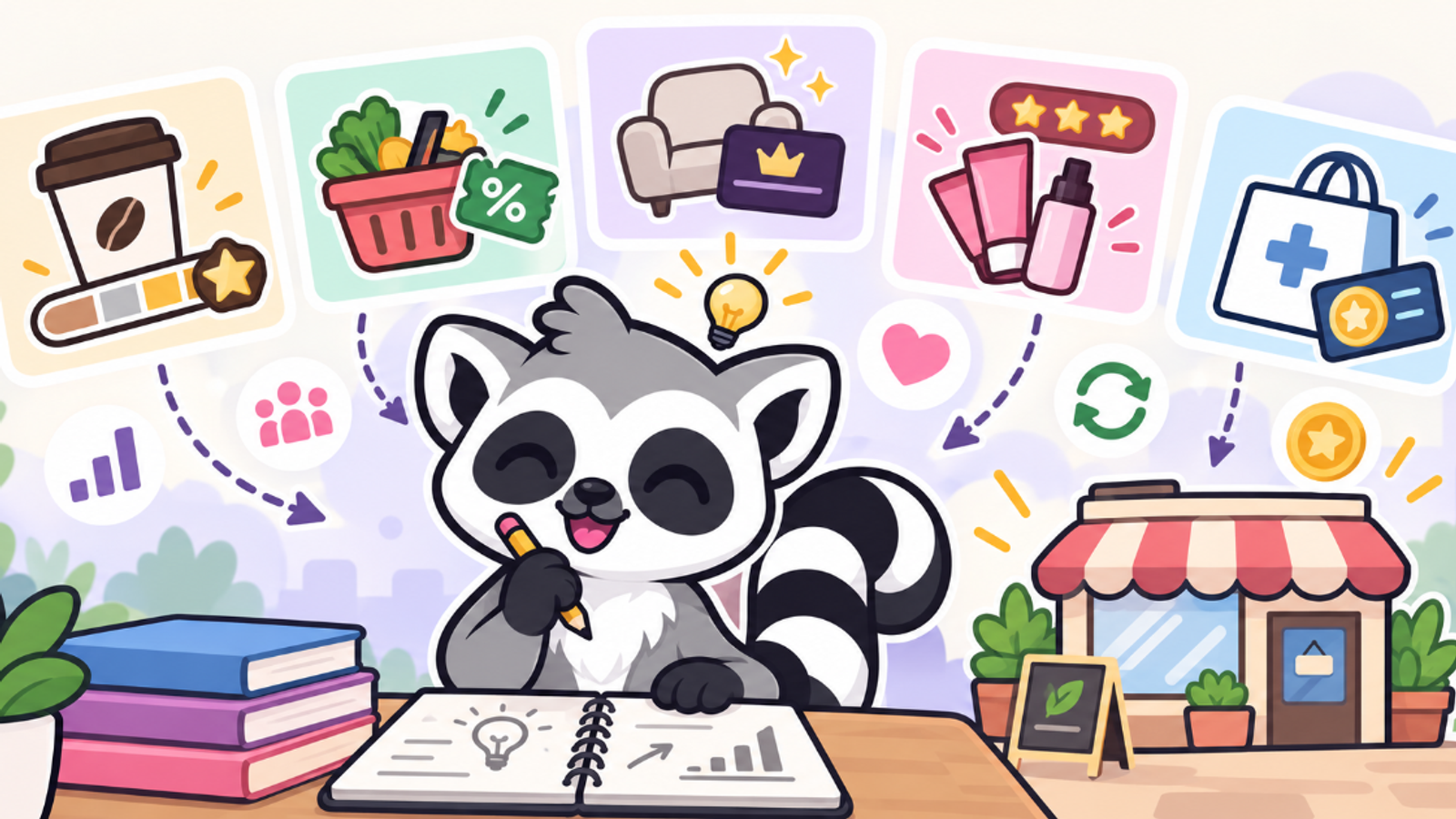
Starbucks makes progress visible. Tesco makes an offer relevant to an individual. IKEA can turn today's purchase into a reason for a later visit. Sephora rewards useful interaction. Boots creates reasons to engage between transactions.
A small business cannot reproduce the infrastructure behind those systems... and it does not need to.
Instead, ask a much simpler question: what is the behaviour I would like to encourage next?
Maybe it is a second appointment. A return within six weeks. A visit on a quieter Tuesday. A review. A January booking. A completed fitness challenge. Or simply staying connected.
Once you know the behaviour, you can design a small interaction around it.
Loyalty is bigger than a loyalty card
This is also why customer loyalty should not be reduced to “buy ten, get one free.” Stamp cards can be extremely effective, but they are one mechanic inside a much bigger idea.
Retention can include recognition, communication, useful reminders, exclusive access, milestones, challenges, personalised offers and rewards. The right mix depends on how your customers naturally interact with your business.
Loytu can handle the digital loyalty and progress side of that relationship, including reward milestones and cards customers can keep on their phones. But it can sit alongside the tools a small business already uses: WhatsApp, Instagram, booking software, email or simply a conversation at the counter.
The objective is not to build a miniature version of a multinational loyalty department.
It is to notice the small behavioural ideas those brands use and borrow the ones that make sense for your customers.
So next time a big brand gives you a personalised offer, nudges you towards a reward or finds a reason to get you back through the door, stop for a second and ask: “What are they trying to get me to do next?”
Then ask the more useful question: “What would the small-business version of that look like for us?”